The chalkboard has had a good run. But across the world, cafés and quick-service restaurants are replacing handwritten boards and laminated menus with digital menu boards – and the reasons are as practical as they are visual.
An industry on the move
Restaurant software company Restaurant365 points to a 2022 Square survey where roughly 9 out of 10 quick-service operators without digital menus said they planned to switch. Analysts expect the digital signage market for quick-service restaurants alone to grow at double-digit rates through to 2030.
Why cafés are making the change
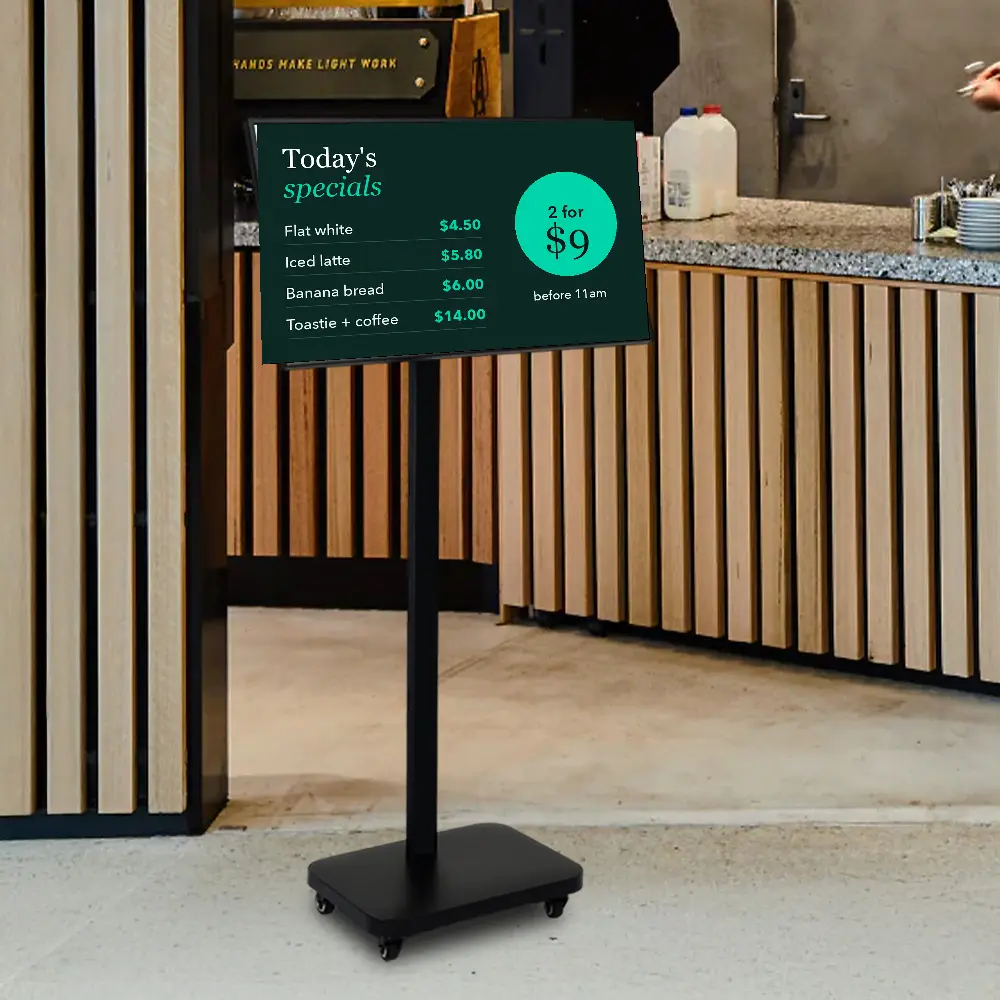
- Sell more of what you want to sell. A bright photo of banana bread or a “2 for $9 before 11am” deal at the moment of ordering is hard to ignore. Menu board provider AIScreen reports that 91% of customers say digital displays influence what they buy.
- Change the menu by the hour. Breakfast until 11, lunch until 3, then afternoon specials – scheduled automatically, with no one climbing a ladder with chalk.
- Update prices instantly. When the price of milk or coffee beans changes, your menu can change the same day at no cost.
- Fill quiet periods. Push a slow-moving item or an afternoon deal exactly when trade drops off.
- Look the part. A clean, well-designed screen tells customers your café is modern and cared for.
Start small
You don’t need a wall of screens. Many cafés start with one screen near the counter for specials and add more once they see the results. Content can be as simple as a photo and a price – and with a cloud CMS you update it from your phone before you open.
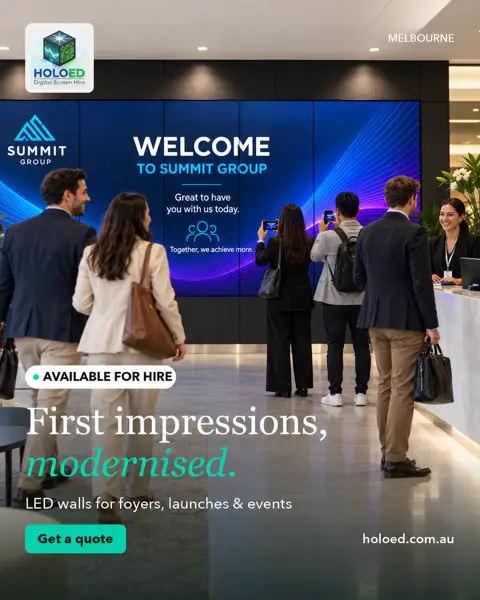
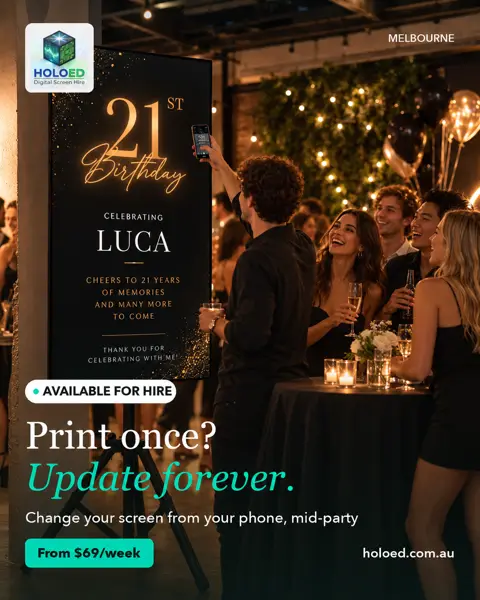
HoloEd hires 55-inch commercial screens on floor stands from $69 per week, with optional CMS software to schedule your menus. See the flat-stand screen or talk to us about your café.