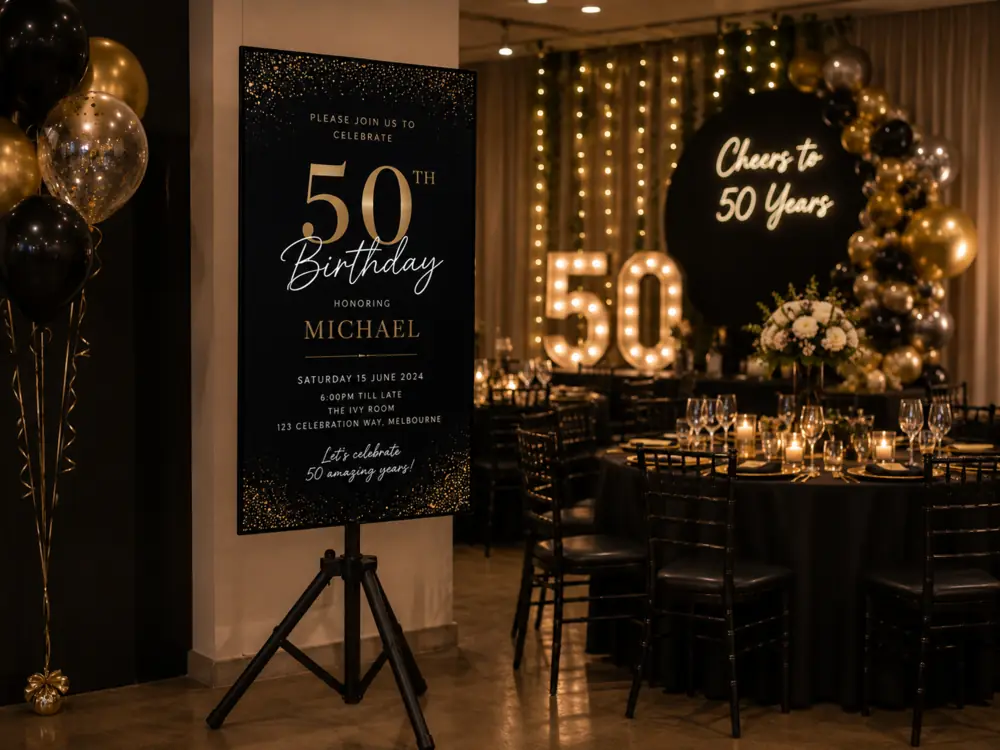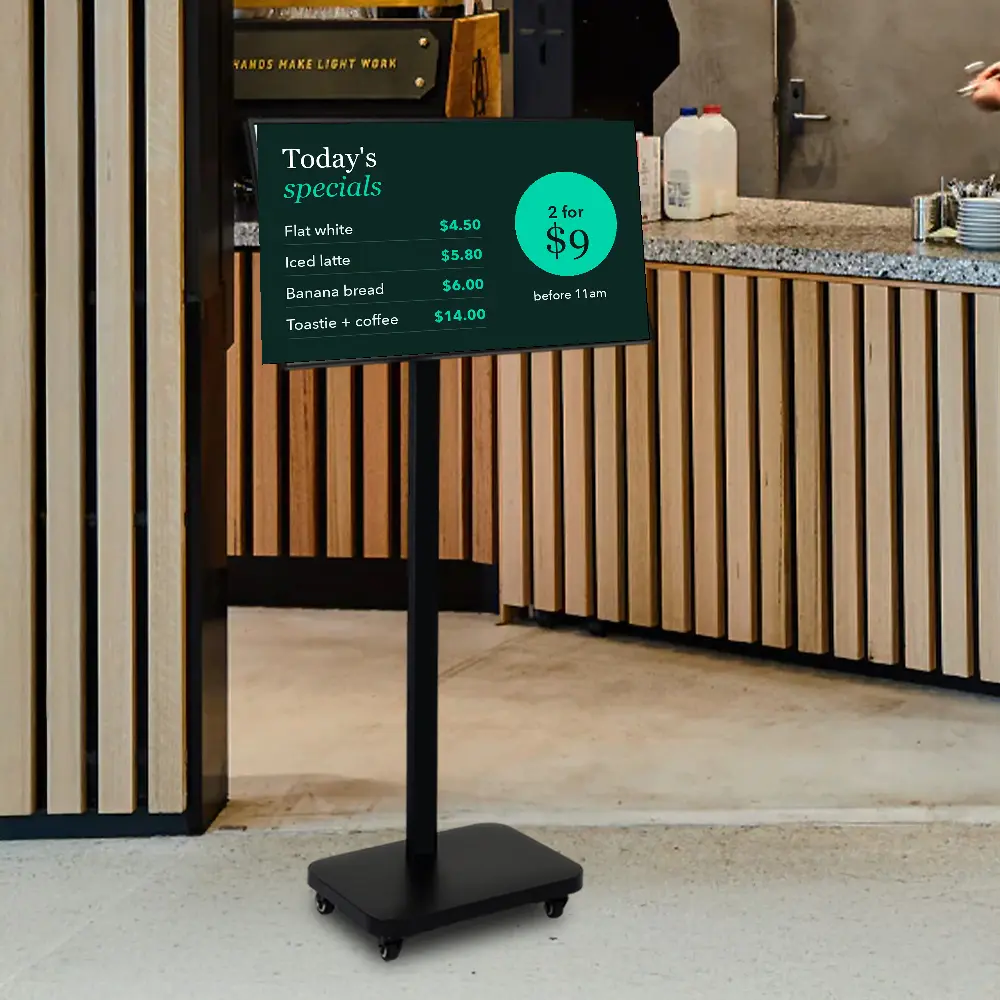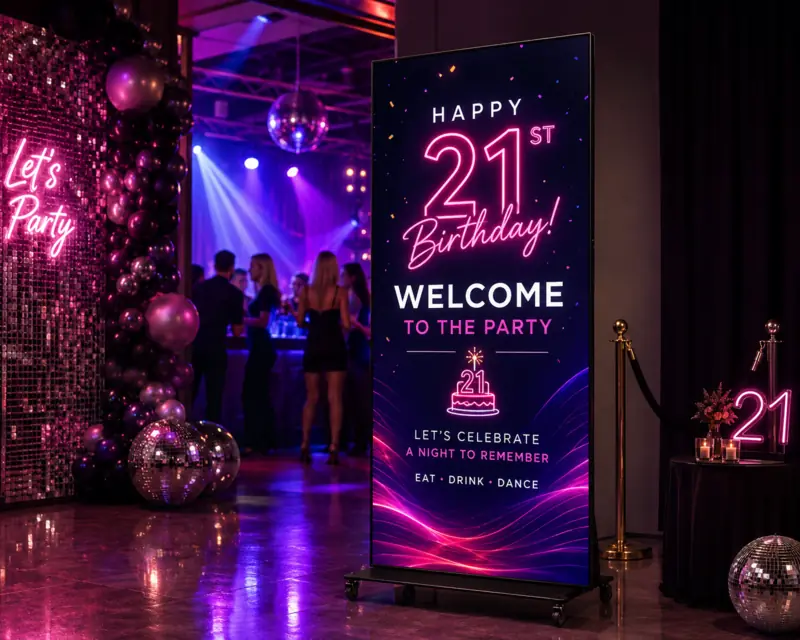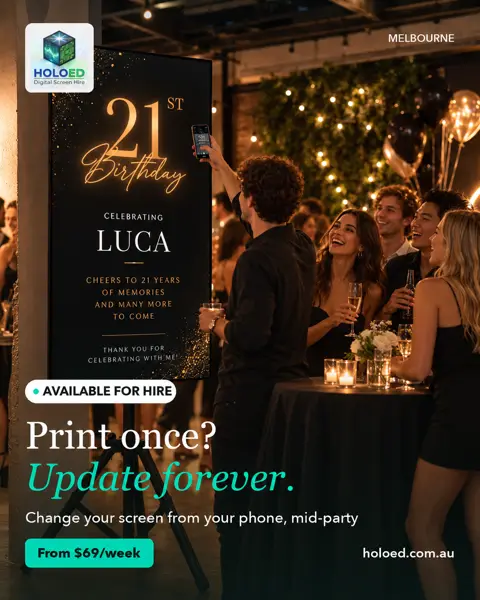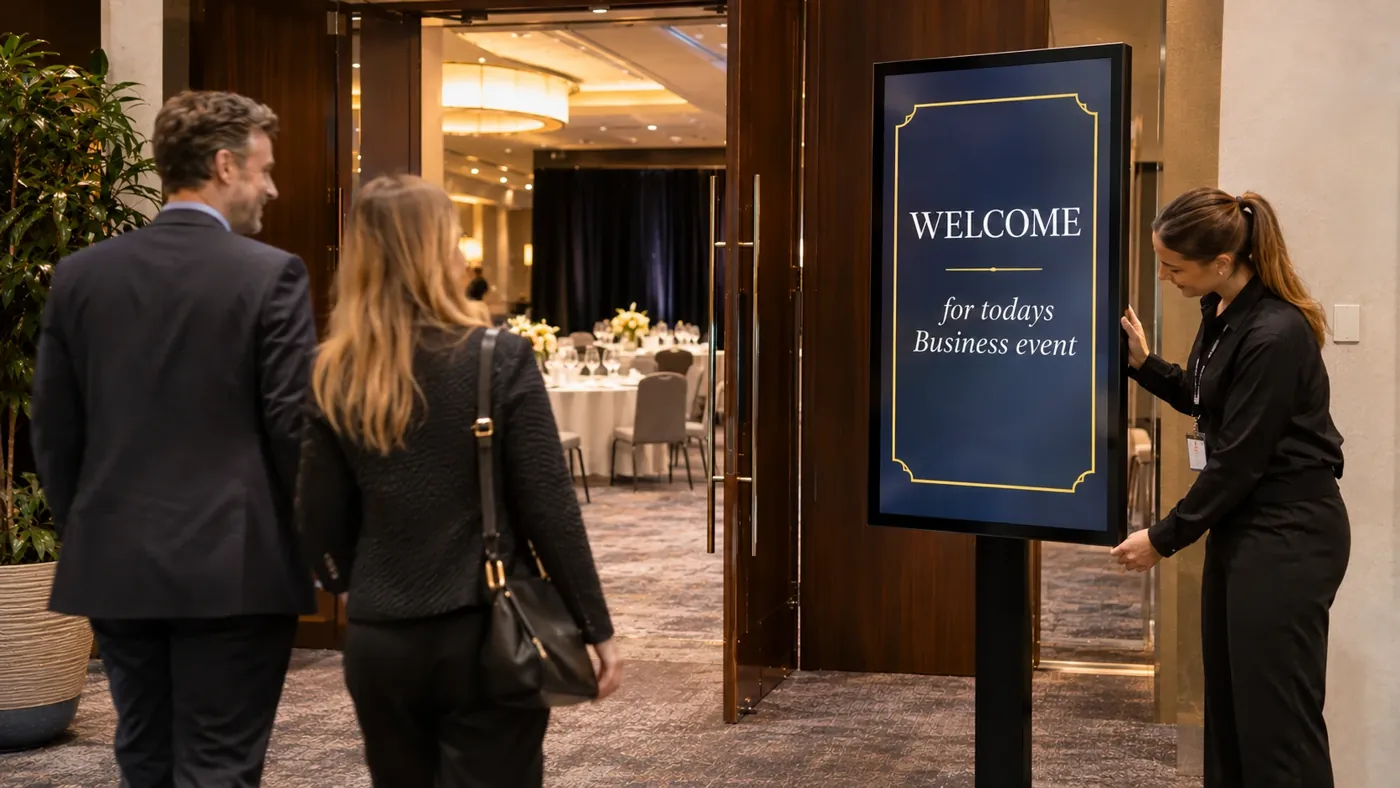
Most businesses think of a screen as a cost: something you buy or hire to promote your own products. It can also be something you charge for. Here are two examples, one for an event venue and one for a retail store.
Advertisers already pay for screen time on a large scale. In 2025, 76.6% of Australia’s $1.45 billion out-of-home advertising spend went to digital screens. The examples below are a small, local version of the same idea.
An event venue sells the screen with the room
A function venue already sells add-ons: a drinks package, a lectern and microphone, a dance floor. A screen fits on the same list. The client gets:
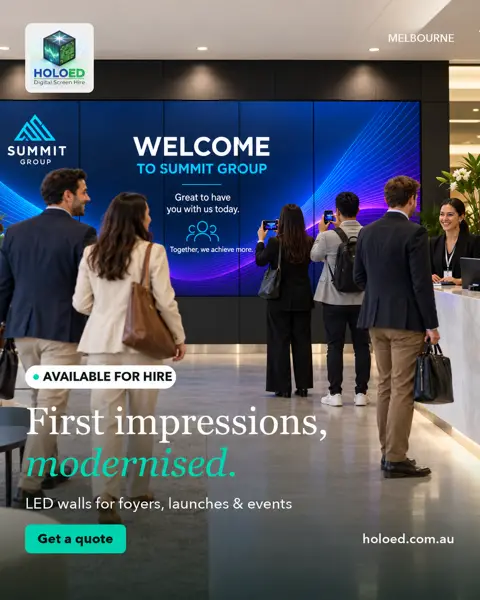
- A welcome screen at the entrance with their names or company logo
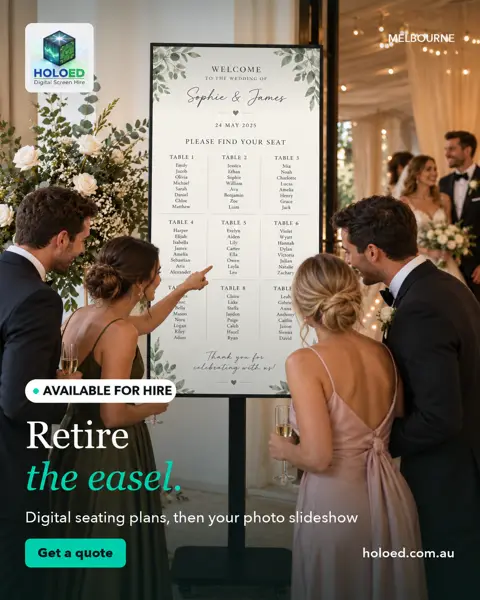
- A seating plan that can still change on the day
- A photo slideshow for a wedding, a milestone birthday or a memorial
- The run sheet and room directions for a conference
- Sponsor logos on rotation for a fundraiser or awards night
A venue can charge for it as a line item on the quote, build it into a premium package alongside other upgrades, or price it per screen where a conference wants one at the door and one in each breakout room.
The sums work because one screen serves many bookings. As an illustration only: a venue hires a 55-inch screen for $69 + GST a week and has three functions that week. If each client pays $80 for the screen add-on, that is $240 against a $69 cost. Your prices and bookings will differ, and a venue with steady bookings may be better off owning the screen through hire purchase.
It also saves the venue work. Clients stop asking for easels and printed boards, and a last-minute change to a name or a table is made on a phone.
A retail store sells the screen for a brand activation
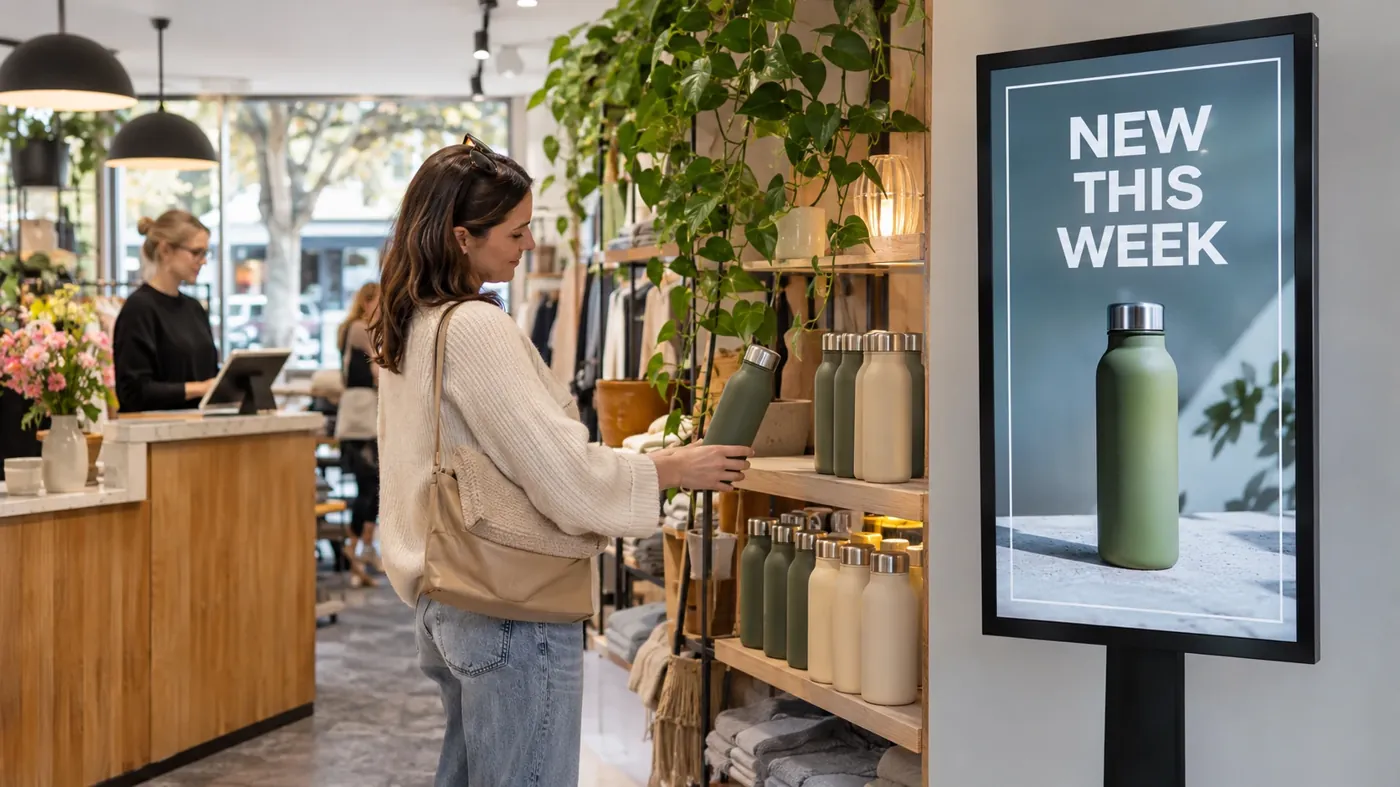
Brands pay for attention at the point of sale. If you stock their product, you have something they want: a screen next to the shelf, in front of customers who are ready to buy.
A brand activation is a short campaign, often one to four weeks, for a product launch, a seasonal range or a promotion. The store provides the position and the screen. The brand provides the artwork or video and pays a flat weekly fee, contributes from its marketing budget, or offers better trade terms or free stock in return.
- Put the screen where the product is: beside the display, at the counter or in the window
- Agree the dates, the fee and who supplies the content, in writing
- Give the brand one screen or one slot in the loop, and keep the rest for your own offers
- Record sales of the featured product before and during the campaign, and share the result
That last point is how a one-off becomes a regular arrangement. A supplier who can see that sales rose during the activation has a reason to book the next one.
What to agree before you start
- The price, the dates and what happens if either side cancels
- Who supplies the artwork, and in what size and format
- That you can refuse content you don’t want shown in your business
- For retail, whether the brand gets exclusivity in its category for the campaign
Invoice it like any other sale, and ask your accountant how the income and GST should be treated. If the screen faces the street, check your lease and any council rules on signage.
Start with one screen
Hire one screen and test it. A venue can offer it on the next five quotes and see how many clients take it. A store can ask its two biggest suppliers whether they would pay for a fortnight at the counter.
HoloEd screens are updated from a phone or laptop, so changing from one client or brand to the next takes a few minutes. See screens and prices, or tell us what you’re planning.